Explaining SAVI
SAVI is a rare disease caused by a change in a gene called STING1. The word “STING” is short for “Stimulator of Interferon Genes”.
SAVI stands for ‘STING-Associated Vasculopathy with Onset in Infancy’.
The STING1 gene helps turn on the interferon response. In people with SAVI, this response is excessive – the body produces too much interferon, even when it’s not needed. As the name suggests, SAVI usually appears in infancy.
What causes SAVI?
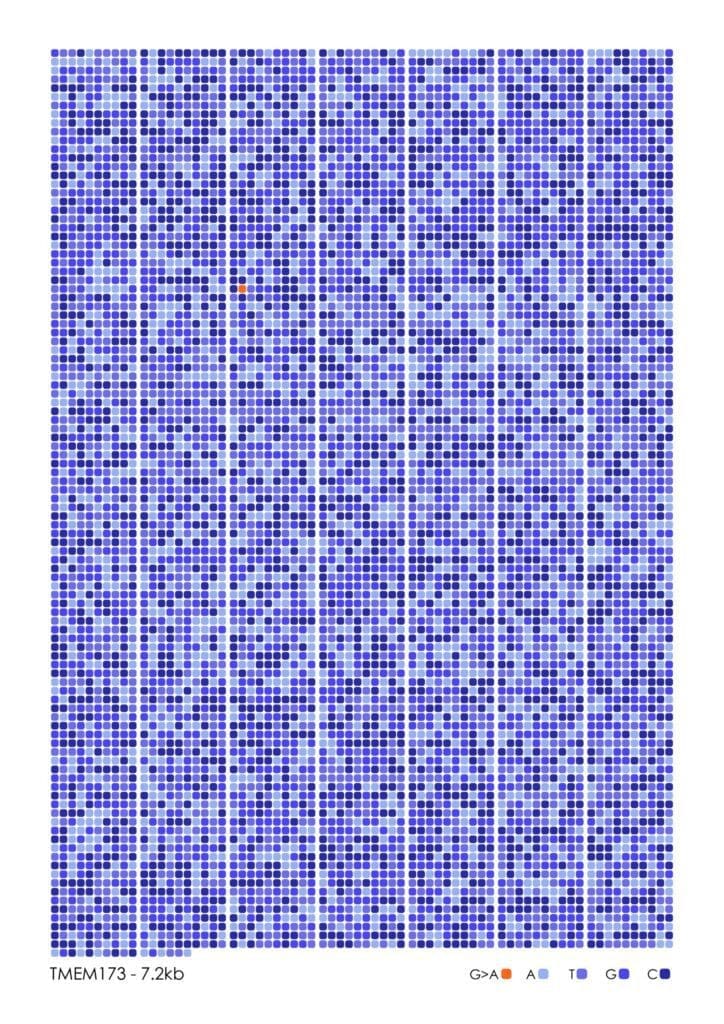
This diagram represents the STING1 gene (TMEM173) which has 7200 bases (A, T, G and C). A single base substitution at a number of different positions in the STING1 gene can lead to SAVI for example, there is a single substitution error at position 463, where there should be a G (Guanine), there is instead an A (Adenine).
This tiny change, just one wrong letter, leads to SAVI.
There are around 20,000 genes in the human genome, with 3 billion base pairs (6 billion bases). Errors in DNA are common. Most errors have no effect, or are quietly repaired. But sometimes, even one wrong base in the right (or wrong) place can lead to serious disease.
Credit: www.biopixelprints.com
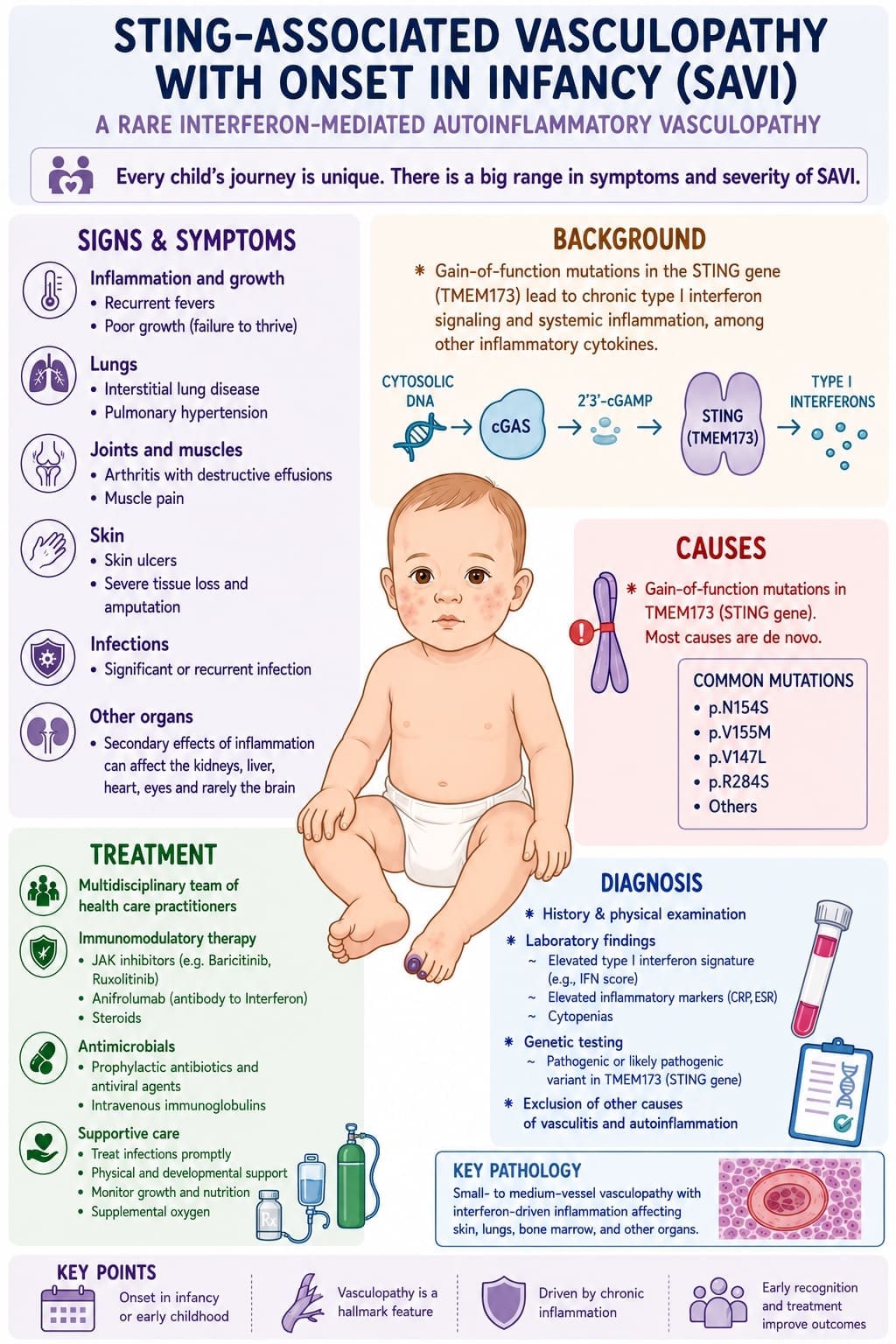
The high ongoing levels of interferon cause a lot of inflammation, especially in the lungs and around blood vessels. This inflammation causes scarring, damaging the lungs to the extent that the children need additional oxygen. Ultimately, SAVI leads to respiratory failure. The inflammation can be so bad that those with the condition can experience ulcers and eventually lose their fingers, toes ears, and nose.
Left untreated, SAVI has a five-year mortality rate of 30%. Our current focus is on SAVI.

Funded research vacancies
We do not currently have funded research vacancies. We anticipate opportunities will become available in the future. We welcome expressions of interest and will update this page accordingly


Where we need you
Every donation helps us create a future where rare genetic disorders are understood and fully treatable.
Every gift of time supports us along our pathway to a cure.